
Propane delivery works one of two ways. Either you watch your own tank and call us when it gets low, or we track how fast your home uses propane and bring a load before you run short. Everything else, the truck, the hose, the meter on the side of the bobtail, is the same either way.
4-T Propane runs three locations, at Buchanan Dam, Marble Falls and Llano, so the truck heading to your tank starts close to it. This guide covers how a delivery actually happens, who decides when it happens, and what you can do to make sure you are never the house without heat on a cold morning.
- What propane delivery actually is
- What a delivery day looks like
- Who decides when you get a fill
- How you know how much is left
- What happens if the tank runs dry
- What changes when the weather turns
- Letting us watch the tank for you
- Which setup fits your place
- Frequently asked questions
What propane delivery actually is
Propane delivery is a truck bringing liquid propane to the tank on your property and pumping it in through a hose. The tank stays put, only the fuel moves.
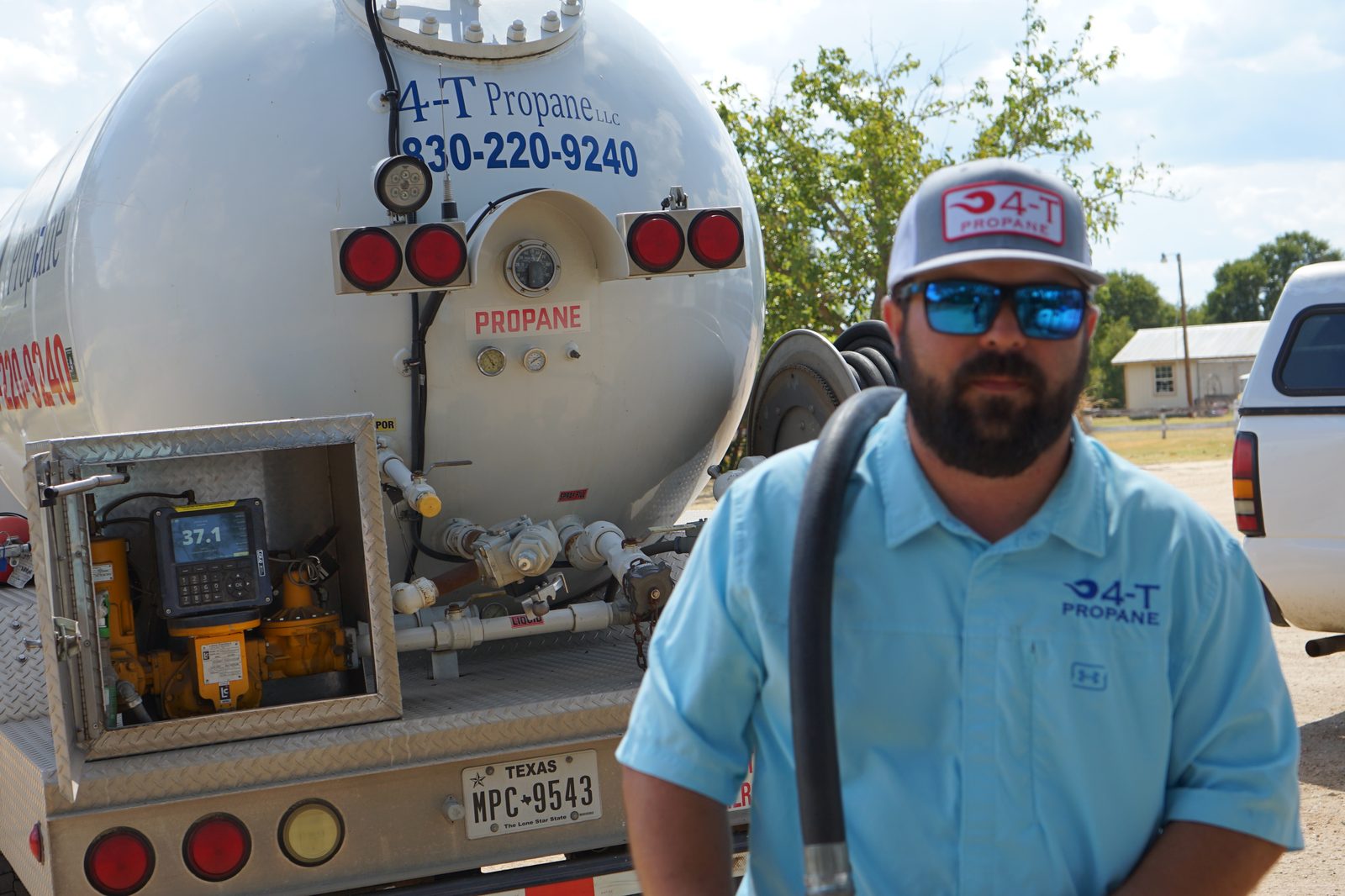
A meter on the truck counts the gallons as they go in, and that count is what you are billed for.
The truck is called a bobtail
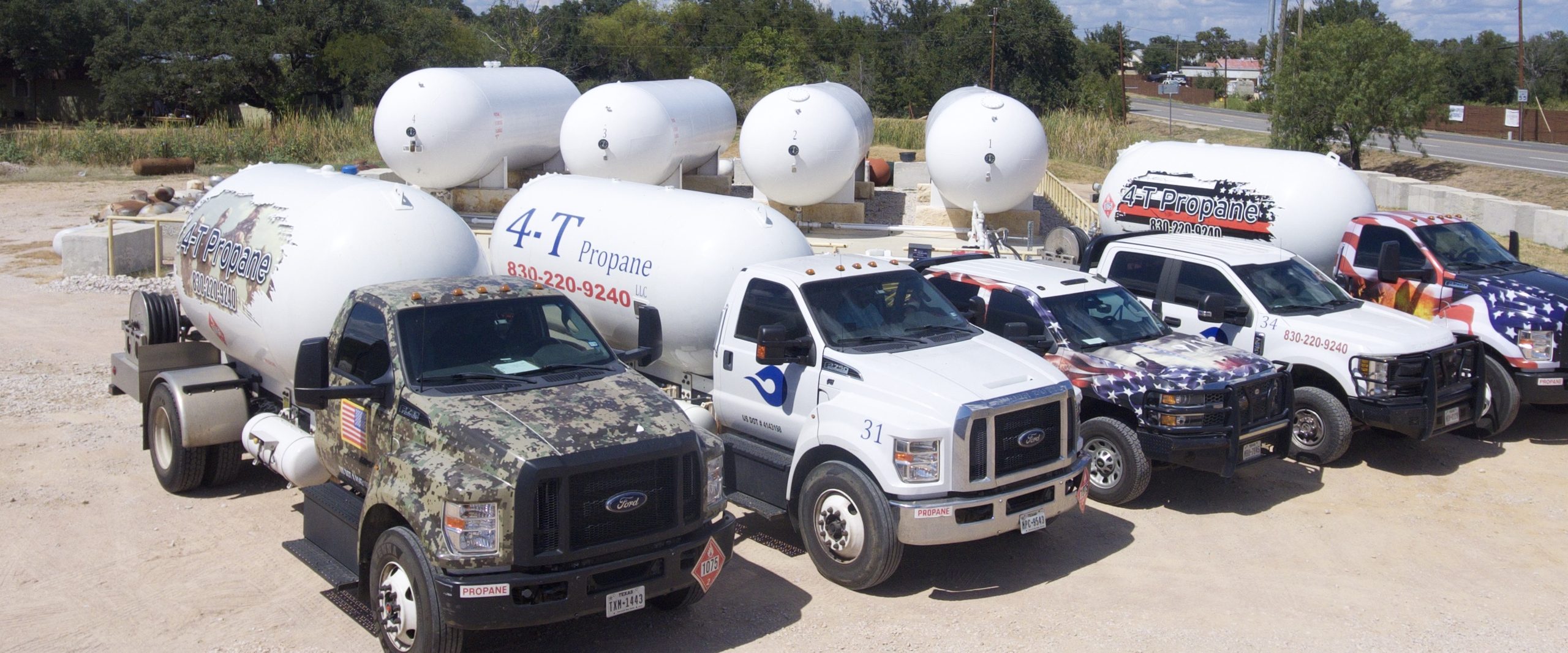
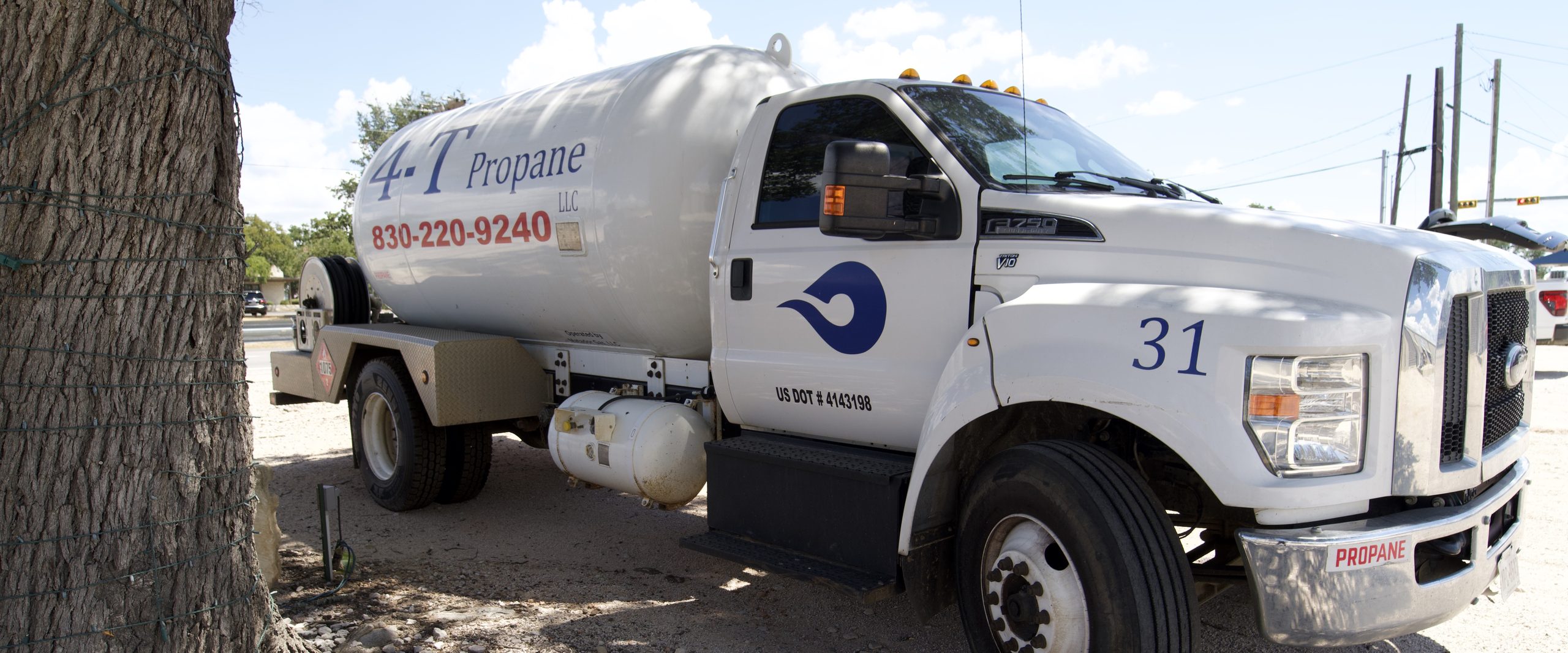
A bobtail is a delivery truck with a propane tank built onto the frame and a hose reel on the side. It loads at one of our locations, then runs a route.
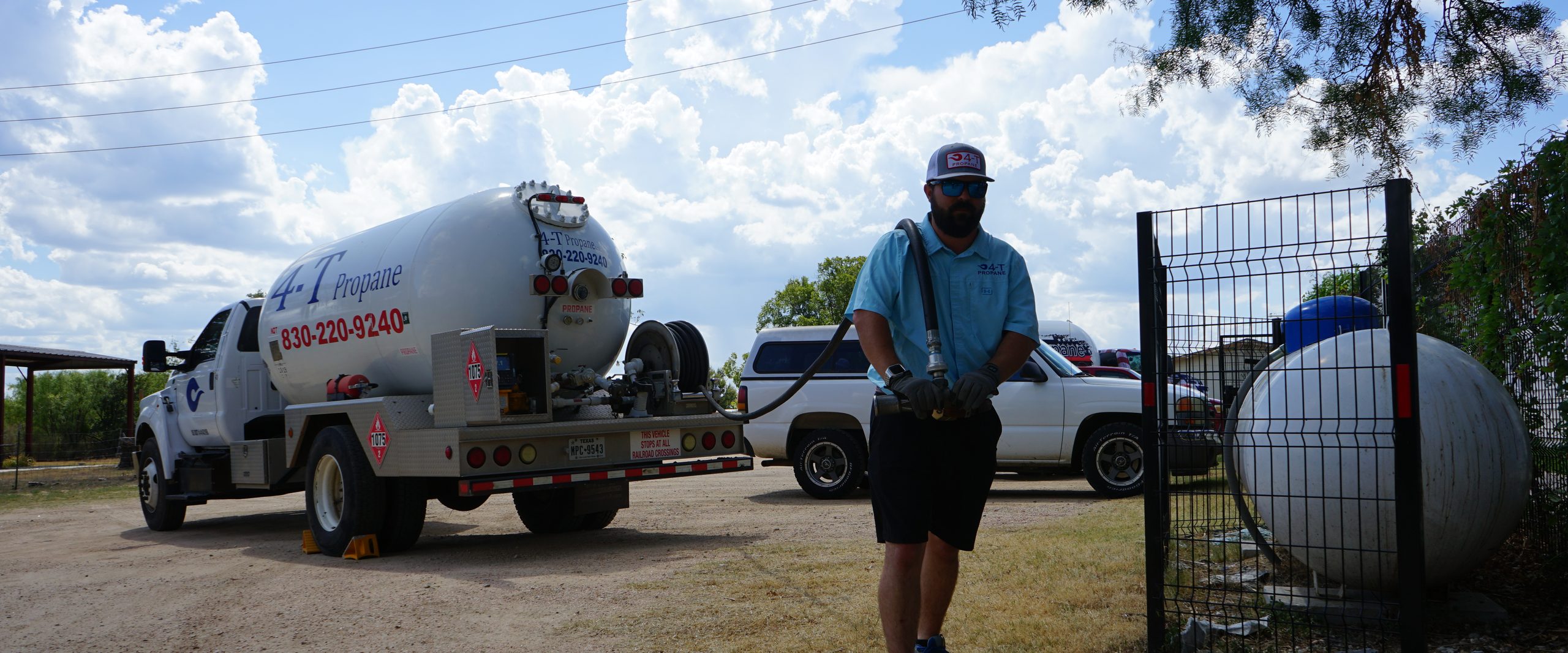
The driver pulls the hose to your tank, connects at the fill valve, and watches the meter.
Propane is stored as a liquid and used as a gas
Under pressure in your tank, propane is a liquid. When you open a burner, it leaves the tank as a gas.
That is why a tank is never filled to the top. Space is left for the liquid to expand on a hot day, which is why a full tank reads about 80 percent on the gauge and not 100. The US Energy Information Administration explains the fuel itself in more detail.
The meter on the truck is the invoice
The driver zeroes the meter before the hose opens and reads it when the fill stops. That reading is the gallons you took, and it is the same kind of sealed meter as the pump at a filling station.
If you want to watch the number go up, come out and stand with the driver. Plenty of our customers do.
What a delivery day looks like
A fill takes a few minutes at the tank. Most of the work happened before the truck turned into your driveway.
Before the truck arrives
The bobtail loads at one of our locations from the bulk storage tanks, and the driver takes a route built around who needs fuel and where they are.
Routing is why we ask you to call at 30 percent rather than at 10. At 30 percent you fit into a run that is already going past you.
At the tank
- The driver pulls the hose from the reel to your tank.
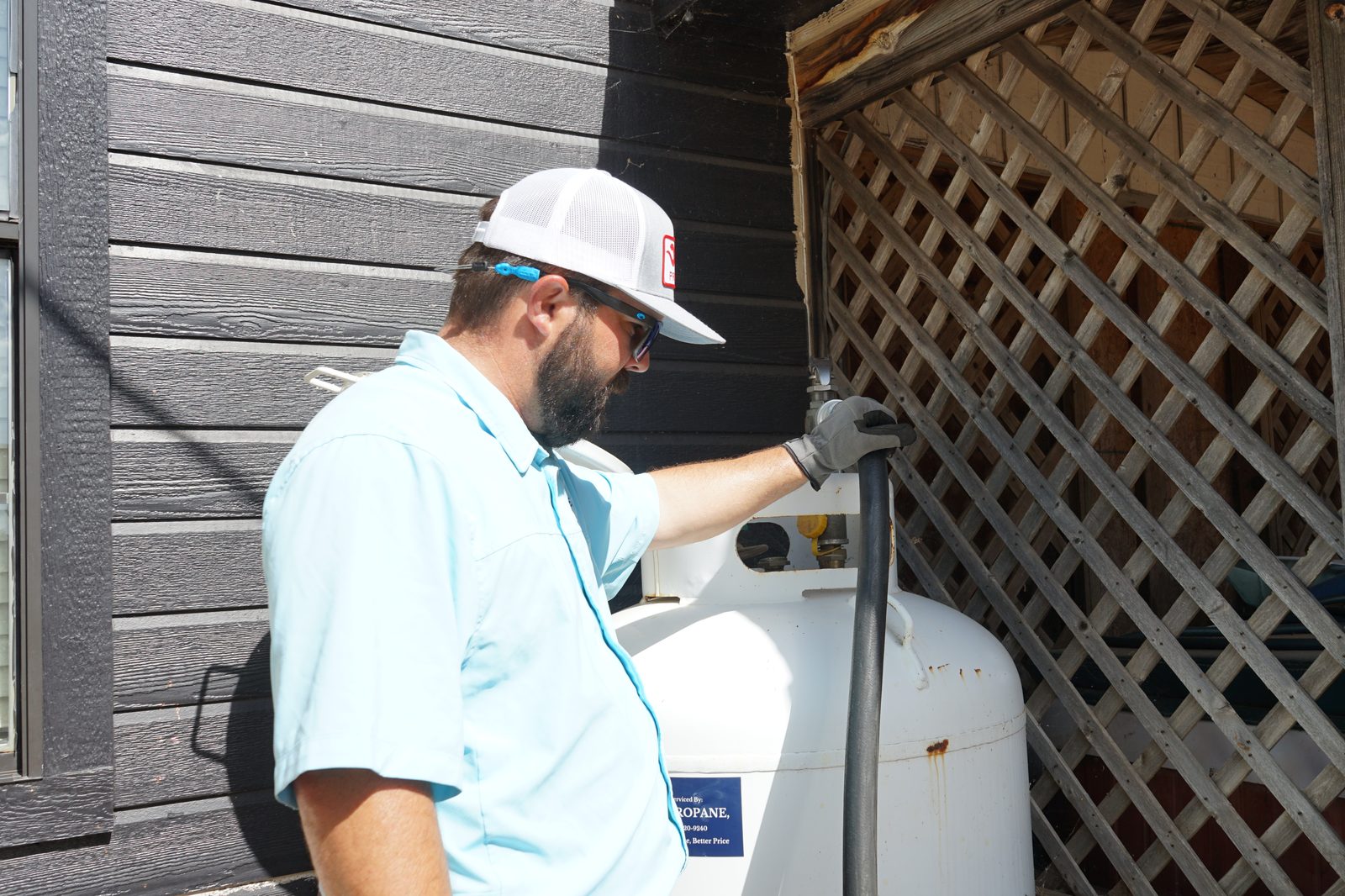
- The fill valve under the lid is opened and the hose is connected.
- The meter is zeroed and the pump runs until the tank reaches its safe fill level, which is about 80 percent.
- The driver closes up, checks the connection for leaks, and reads the meter.
- You get a ticket showing the gallons delivered.
What slows a delivery down
A locked gate with no code on file. A dog nobody warned us about. A vehicle parked over the tank. Brush grown up around the fill valve since last winter.
None of those is a disaster, but each one can turn a five minute stop into a return trip, and in a cold week a return trip is days away. Tell us once and it stays on your account.
Who decides when you get a fill
You do, or we do, and you pick which. That is the whole choice, and on most propane accounts it has a name: will call, or automatic delivery.
Will call means you call us
You keep an eye on the gauge. When it gets low you call the office and we put your address on the schedule. It suits people who are at the property often and do not mind checking.
Automatic means we track it for you
We record how much you take and how fast you use it, then book the fill before you get low. Nobody checks a gauge in the rain.
And if we are going to miss a window, you get a call from us first. That is the part people remember.
It is the setup most of our customers end up on, and the one that holds up best in a cold week.
Which one causes fewer problems
Automatic, for most homes. The run-out calls we take are almost always from will call accounts where life got busy. We have written the full comparison in automatic delivery or will call, including who will call genuinely suits.
How you know how much is left
Lift the lid on top of your tank and read the round dial. It shows a percentage of capacity, not gallons, and that catches people out the first time.
The dial reads percent, not gallons
A 500 gallon tank reading 30 percent is not holding 150 gallons of usable fuel, because the tank was never full at 100 to begin with. Work from the percentage and call when it gets low rather than doing arithmetic on it.
When to stop watching and call
Call at 30 percent. That gives us room to fit you into a route that is already running instead of making a special trip. Step by step instructions, including what the numbers mean on different tank sizes, are in how to read your propane tank gauge.
Why the gauge is not the whole story
A float gauge is a mechanical part and it can stick, especially on a tank that sat unused through a summer.
If the needle has not moved in weeks on a house you are living in, the gauge is the problem rather than your luck. Mention it when you call and the driver will look at it.
What happens if the tank runs dry
Everything that burns propane stops. Heat, hot water, the cooktop, anything else on the system. Getting it going again is more than a refill, because the system has to be checked before it is put back into service.
An empty tank needs a leak check
When a tank empties, air and moisture can get into the lines. Before the gas goes back on, the system gets a pressure test and every appliance pilot is relit by someone who does that for a living. That is the rule in the national propane code, and it is not something to work around.
Call us, do not try to restart it yourself
Call us and say the tank is empty. Say it plainly, because an empty tank is a different job from a normal fill and we schedule it differently. The full walk through is in what to do if you run out of propane.
Propane has a smell on purpose
Propane has no smell of its own, so an odorant is added to it. Most people describe it as rotten eggs, a skunk, or a dead animal. If you catch that smell, treat it seriously and call us.
What changes when the weather turns
Your house burns propane faster, and so does everybody else’s at the same time. A tank that lasted two months in October can go in a few weeks during a hard freeze.
Everyone calls in the same week
The week the forecast turns is the week the phone does not stop. Automatic delivery customers are already on the schedule, which is the honest reason most people switch after their first bad winter.
A lake house empty half the year is a different job
Weekend places around Lake Buchanan, Lake LBJ and Lake Travis do not burn fuel on a steady curve, so usage history is a weaker guide. Tell us when you are coming up and we will work to it. What to do before a freeze is in getting your propane ready for a Texas cold snap.
Cold air makes a tank read lower
Propane contracts as it cools, so the same fuel takes up less room on a freezing morning than on a warm afternoon.
A gauge can drop a few points overnight without you burning anything unusual. That is normal, and it is one more reason not to run a tank down to the bottom in winter.
Letting us watch the tank for you
4-T Propane keeps track two ways. One is your own usage history. The other is a monitor fitted to the tank that reports the level back to us.
Usage history covers most homes
Once we have delivered to you a few times we know roughly what your place takes and how the weather moves it. For a house lived in year round that is usually enough.
A monitor reads the real number
A tank monitor sends us the actual level instead of an estimate. It earns its keep on a property nobody visits in winter, a place with unpredictable use, or a long driveway where a wasted trip costs everybody. More detail in how propane tank monitoring works.
Which setup fits your place
Find the row that sounds like your situation.
| Your situation | What we would put you on | Why |
|---|---|---|
| Year round home, propane heat | Automatic delivery | Heat is the biggest draw and a run-out is worst in winter |
| Weekend or lake place | Automatic delivery plus a monitor | Usage history cannot predict a house nobody is in |
| Cooking and hot water only | Automatic delivery | Steady and easy to predict, so it mostly runs itself |
| You are at the property daily and want control | Will call | You will see the gauge before it matters |
| Long or steep driveway | Automatic delivery plus a monitor | Fewer trips, and the right truck sent the first time |
| Building a new house | Talk to us before the drywall | The tank location has to be settled before the gas line goes in |
If none of those is quite you, call us and describe the place. That is a two minute conversation, not a sales call.
Frequently asked questions
How often does propane get delivered
Delivery frequency depends on what you burn and the size of your tank. A home heating with propane through a Hill Country winter needs filling more often than a house using it only for cooking. On automatic delivery you do not need to work it out, because we track it.
Do I need to be home for a propane delivery
No. The driver needs clear access to the tank and a path for the hose. If there is a gate, a dog or a code, tell us once and we will keep it on your account.
How do I pay or check my account
Through your online account, on the web or the iOS and Android apps. You can pay a bill and look at your account without calling the office, which is useful at the hours most people think about it.
What is the difference between a bobtail and a transport
A bobtail is the delivery truck that fills tanks at homes and businesses. A transport is the larger truck that refills the bulk storage tanks at our locations. The one that comes to your house is a bobtail.
Can I switch from will call to automatic delivery
Yes, and it takes one phone call. Nothing changes about your tank or your equipment, only who is responsible for watching the level.
What do you deliver propane in besides a tank
We refill cylinders for grills, RVs and forklifts at our locations, and we deliver bulk propane to commercial customers. Propane does a lot of different jobs, from grills to forklifts to crop drying.
Why was my tank only filled to 80 percent
Because that is full. Liquid propane expands when it warms, and the space above the liquid is what gives it somewhere to go. A tank filled to 100 percent on a cool morning would have nowhere to put that expansion by the afternoon. Every propane tank in the country is filled this way.
Do you deliver out to the lake houses
Yes. Buchanan Dam, Kingsland, Lago Vista, Point Venture, Jonestown and the rest of the Lake Travis and Lake LBJ communities are all on regular runs. Steep driveways are common out there, so mention yours when you call and we will send a truck that can make the turn.
What if I am a new customer with an existing tank
Call us and we will look at what is already on the property. Who owns the tank matters, because it decides who is allowed to fill it, and that is worth settling before you need fuel rather than during a cold snap.
4-T Propane has been running propane across the Highland Lakes and Northwest Austin for years, out of three locations. Call and you get a person who knows the roads.
4-T Propane15115 TX-29, Buchanan Dam, TX 78609
(830) 220-9240