
To read your propane tank gauge, lift the lid on top of the tank and read the round dial underneath. The gauge shows a percentage of capacity, not gallons. A full tank reads about 80 percent, not 100, and you should call for a fill when the gauge reaches 30 percent.
That is the whole job, and it takes about ten seconds once you have done it once. The rest of this explains what the number means on your tank size, why 80 is full, and the two things that make a gauge lie to you. It is one piece of how propane delivery works.
Where is the gauge on a propane tank
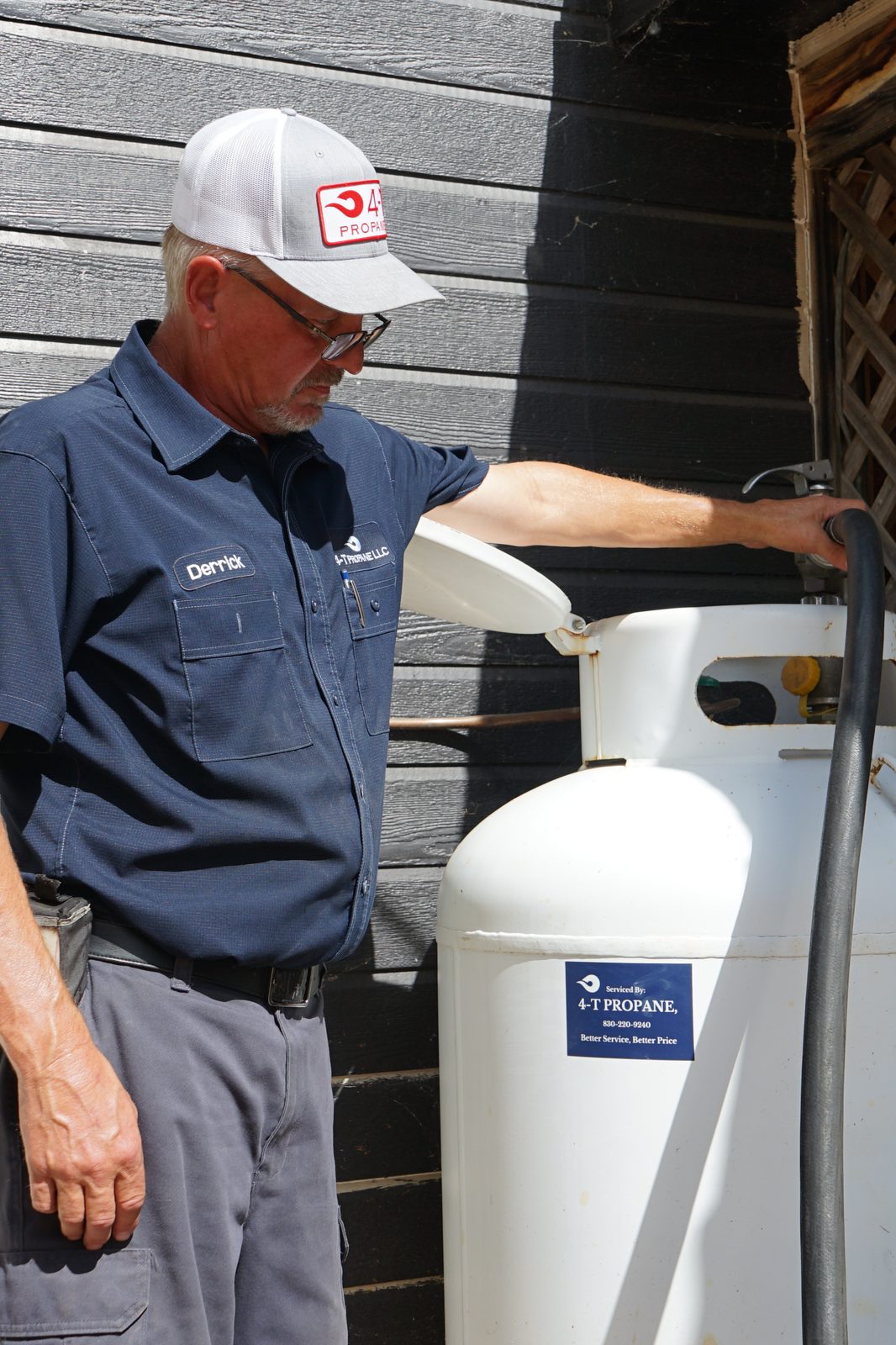
Under the dome lid on top of the tank, with the valves. On a standard horizontal residential tank the lid lifts or swings back by hand, with no tools.
What you are looking at under the lid
Several fittings sit under the lid and only one is the gauge: the round dial with numbers from 5 to 95 around the face. The others are the fill valve, the service valve and the relief valve, and none of them is yours to touch.
A note before you open it
Opening the lid to read the dial is safe and it is meant to be done. Turning any of the valves is not. If something under that lid looks damaged, frosted over, or is hissing, close the lid, step away and call us.
What does the number on the gauge mean
The number is the percentage of the tank’s capacity currently holding liquid propane. It is not gallons, and it is not a fuel gauge like the one in a car.
Turning percent into gallons
Multiply the tank’s size by the percentage. A 500 gallon tank at 40 percent is holding roughly 200 gallons. The catch is that the tank was only ever filled to about 80 percent, so you have less headroom above that reading than the arithmetic suggests.
| Gauge reading | What it means | What to do |
|---|---|---|
| 80 percent | A full tank. This is as high as it goes | Nothing |
| 50 percent | Comfortable in mild weather | Nothing, unless a freeze is forecast |
| 30 percent | Time to arrange a fill | Call us, or relax if you are on automatic delivery |
| 20 percent | Getting low, and low in winter is a short runway | Call us and say it is low |
| 10 percent or less | Close to a run-out | Call us today and say the tank is low |
Why a full tank reads 80
Liquid propane expands when it warms, and the space above the liquid is where that expansion goes on a hot Texas afternoon.
A tank filled to 100 percent in the cool of the morning would have nowhere to put it by three o’clock. Every propane tank in the country is filled this way, under the national propane code, NFPA 58.
How often should you check the gauge
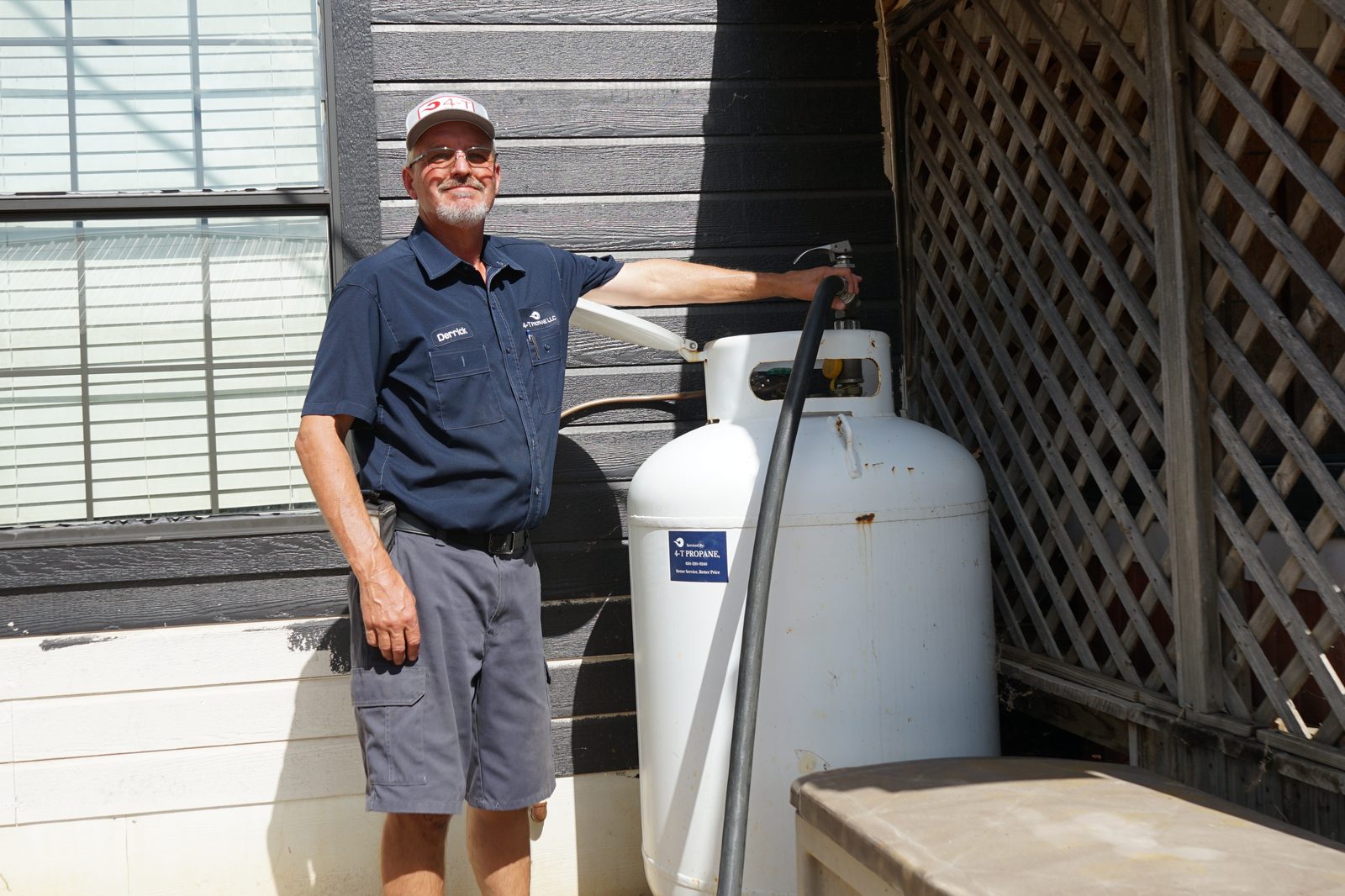
On will call, once a week through winter and once a month the rest of the year. On automatic delivery you do not have to check it at all, though plenty of people still like to look.
Check more often when the weather turns
A tank that moved three points a week in October can move that in a day during a hard freeze. If a cold front is coming, look at the dial before it arrives rather than after.
Watch the rate, not just the number
Two readings a week apart tell you more than one reading ever will. If you dropped eight points in a week and you are sitting at 30, you have a rough idea how long you have. If you dropped eight points and you did not change anything about how you live, that is worth a call.
When the gauge is wrong
Float gauges are mechanical and they do fail. They do not fail often, but when they do they usually stick rather than read wildly.
The needle that never moves
If the dial has read the same number for weeks in a house you are living in, the gauge is stuck. That is the one failure that actually runs people out of propane, because the reading looks reassuring right up until the heat stops.
A reading that drops overnight in the cold
An overnight drop in the cold is usually not a fault. Propane contracts as it cools, so the liquid takes up less room on a freezing morning. A couple of points is the fuel shrinking, not disappearing.
What to do about either
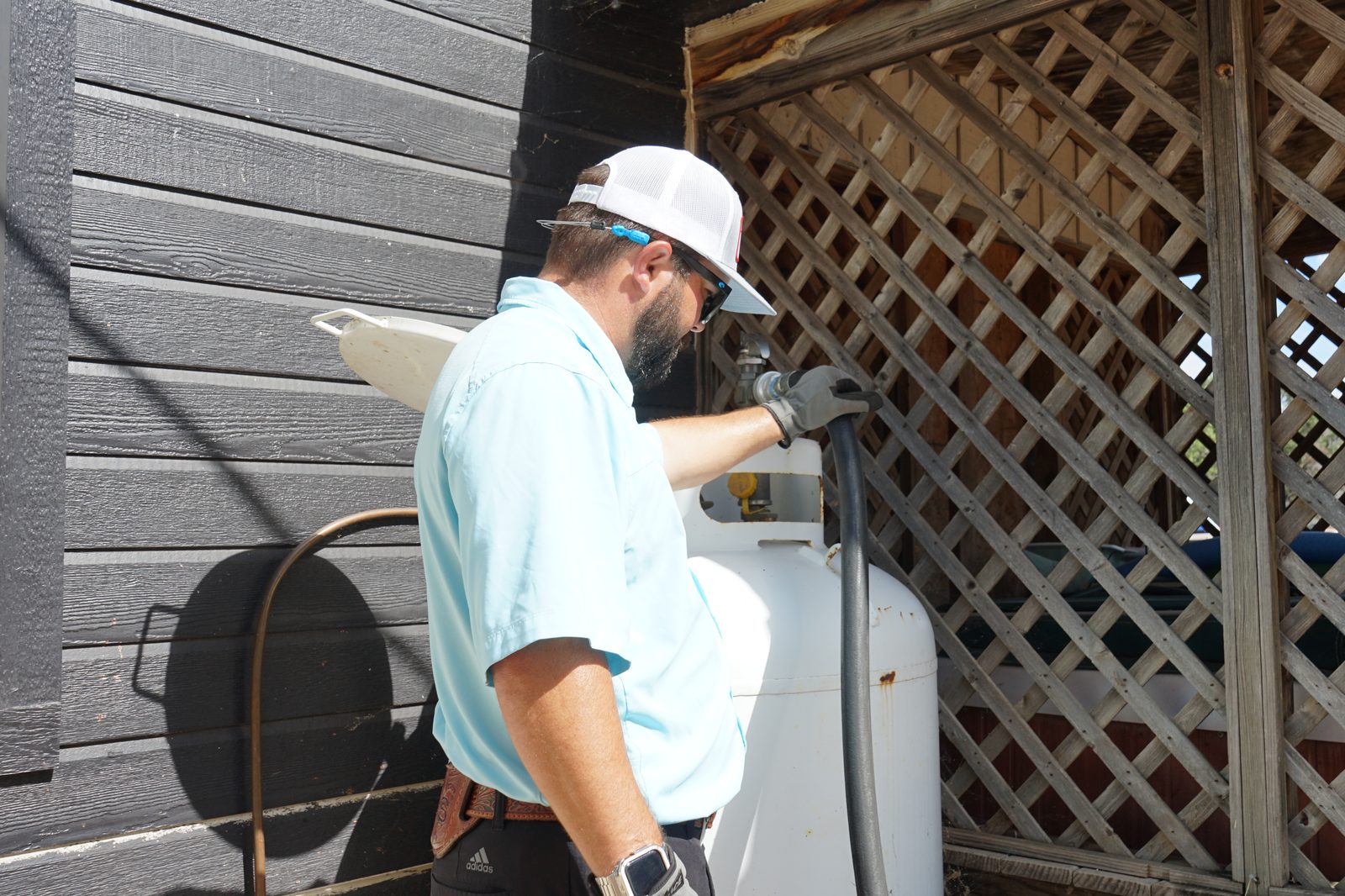
Tell us when you next order and the driver will look at it while the hose is connected. A gauge is not something to take apart yourself.
Frequently asked questions
What percentage should I refill my propane tank at
Thirty percent. That gives enough fuel to keep running while we fit you into a route that is already going your way, instead of making a special trip.
Why does my propane tank gauge only go to 80
Because 80 percent is a full tank. The space above the liquid is there so the propane can expand safely when the weather warms up.
Can I read the gauge without opening anything
You have to lift the dome lid on top of the tank, which is designed to be opened by hand. You never need to turn a valve to read the dial.
My gauge says 0 but I still have gas, what is happening
Usually a stuck float. Do not rely on it. Call us, say the gauge reads zero, and tell us whether your appliances are still running.
4-T Propane delivers across the Highland Lakes and Northwest Austin from three locations. If you are not sure what your gauge is telling you, call and describe it.
4-T Propane15115 TX-29, Buchanan Dam, TX 78609
(830) 220-9240